
Meet the Mountain Gorilla Families in Rwanda
Meet the Mountain Gorilla Families in Rwanda; Volcanoes National Park in Rwanda is ranked the best gorilla trekking destination in the world, home to one of the world’s most iconic and endangered species, the mountain gorillas. These social, intelligent and familial animals live in groups, or families, led by dominant silverbacks, and each has unique characteristics and histories.
Rwanda is one of the three countries in the world where you can see these gentle giants in the wild, and there are 13 habituated groups, which visitors to Rwanda can trek to see. From the legendary Susa Group, studied by Dian Fossey, to the Amahoro Group—a peaceful, loving gorilla family—each family’s story provides insight into the resilience and complexity of gorilla society.
Meet a family of gorillas in the misty forest of the Virunga Mountains on a Rwanda gorilla safari.
Gorilla Family Dynamics
Mountain gorilla groups are structured around a clear social hierarchy, typically led by a dominant silverback male who plays a pivotal role as both protector and leader. These gorilla families, which can consist of anywhere from a few individuals to over 20, are usually made up of adult females, their offspring, and a few subordinate males. The authority of the silverback is recognized and respected by all members, and he is responsible for making decisions about the movement of the group, resolving conflicts, and defending against threats. Within this tight-knit community, relationships are maintained through grooming, play, and close physical contact, ensuring that the group remains cohesive. While the silverback enjoys the highest status, the social dynamics within the group are fluid, with alliances and bonds shifting over time, particularly as young males approach maturity and may eventually challenge the dominant silverback or leave to form their own groups. This intricate social structure is essential for the survival and stability of mountain gorilla groups. Highlighting their complex and highly developed social behavior.
Mountain Gorilla Families in Rwanda are as listed below
Susa Gorilla Family—The Legendary Gorilla Family
Formed in 1974, the Susa Gorilla Family is one of the most legendary gorilla families in Rwanda. This troop was extensively studied by Dian Fossey, a renowned primatologist whose research between 1968 and 1985 played a crucial role in gorilla conservation. The Susa Gorilla Family, named after a local stream, was once famous for its size, boasting 42 mountain gorillas, Byishimo and Impano. These twins were named by Rwanda’s First Family during the inaugural Kwitza Izina Ceremony in 2005, a tradition that has since become an annual event of global significance.
In 2009, the Susa Group split into four separate families: Susa, Karisimbi, Isimbi and Igisha. Today the Susa Group, led by the dominant Impuzamahanga, consists of 19 members, including three silverbacks, five adult females, and three infants.
The Susa gorilla family continues to inhabit the slopes of the Karisimbi Volcano, their ancestral home.
The Karisimbi Gorilla Family
Originally known as Susa B, the Karisimbi gorilla family came into existence in 2009 following its split from the Susa Group. This new troop was formed under the leadership of Nyagakangaga, who led 13 individuals to establish a new home on the slopes of Mount Karisimbi.
In 2010, the group was officially named Karisimbi during the Kwita Izina Ceremony, named for their range around Karisimbi Mountain. However, tension within the group led to another split in April 2012 when a faction broke away to form the Isimbi Group. Today, the Karisimbi Group comprises 10 individuals, including six silverbacks, and has become a cross-border troop, ranging between Volcanoes National Park and the Mikeno Sector in Virunga National Park in the Democratic Republic of Congo.
Isimbi Gorilla Family
The Isimbi Gorilla Family was formed after splitting from the Karisimbi Gorilla Family and is now led by the silverback Muturengere, who took over after the death of the previous leader. Getty in December 2013. With the support of the influential female Poppy, Muturengere has maintained a stable and cohesive group. Currently, the Isimbi gorilla family consists of 16 members, including four adult females and four infants.
Igisha Gorilla Family
The Igisha Gorilla Family is the most recent offshoot of the original Susa Group, formed in November 2014. Led by the dominant silverback Igisha, the group began with 23 gorillas and has since grown to 33 members. Igisha’s leadership has ensured the group’s stability and growth, making it one of the largest gorilla families in Volcanoes National Park.
This gorilla group with its diverse members provides an excellent opportunity for visitors to observe the complexities of gorilla society, from the interactions between the dominant silverback and his subordinates to the nurturing care of mothers of their infants.
Amahoro Gorilla Family
True to its name meaning “peace,” the Amahoro Gorilla Group is the most peaceful gorilla family in Volcanoes National Park. After the death of its dominant silverback in 2002, the group split into two, with one faction retaining the name Amahoro under the leadership of Ubumwe.
Today, this gorilla family consists of 29 members, including four silverbacks, and inhabits the slopes of Mount Bisoke. Their peaceful nature and cohesive social structure make them a favorite gorilla family to trek in Volcanoes National Park
Umubano Gorilla Family
Formed after the Amahoro Group’s split, the Umbano Gorilla Family is named for the collaboration needed to ensure the sustainable conservation of the gorillas, thus the name “Umbano,” meaning togetherness and cooperation.
Led by the young silverback Charles, this group has established itself as a distinct family of 14 members, including eight silverbacks residing on the slopes of Bisoke Volcano.
Sabinyo Gorilla Family
Originally nicknamed “Amavubi” (wasps) due to their aggressive nature, later the group was renamed Sabinyo after the mountain where they range. The Sabinyo Gorilla Family is led by the silverback Gihishamwotsi, who took over from his father Guhonda in 2020; this thrilling group has a long history dating back to its habituation in 1987.
Today, the Sabyinyo gorilla family consists of 15 members and continues to thrive under Gihishamwotsi’s leadership. Visitors to this group can witness the legacy of strength passed down through generations of silverbacks, each contributing to the group’s survival and growth.
Agashya Gorilla Family
Originally known as Group 13, the Agashya gorilla family has a fascinating story of leadership and survival. The group was renamed after an epic battle between the resident leader Nyakairima and the challenger Agashya, who emerged victorious. Under Agasha, the group’s numbers increased from 12 to 19, and she ensures their survival by leading them to the summit of Sabinyo volcano in times of danger.
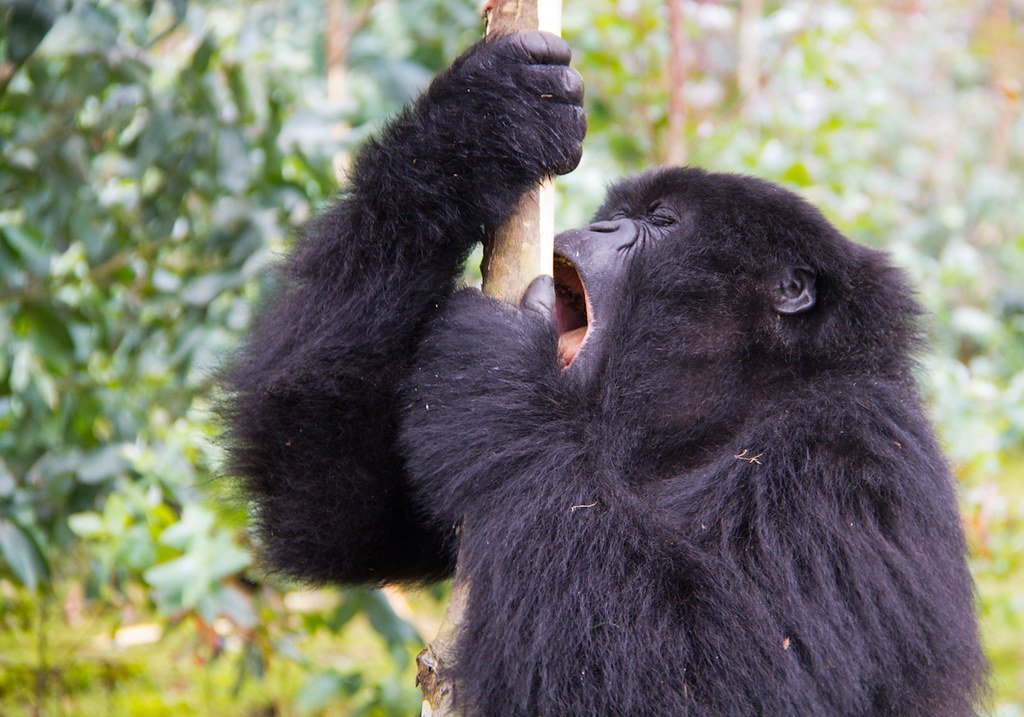
Tracking the Agashya Group can be challenging, but those who undertake the gorilla trek are rewarded with breathtaking views and an unforgettable encounter with these resilient primates.
Muhoza Gorilla Family
The story of the Muhoza Gorilla Family began in 2015 when the dominant silverback Marambo left his natal group, Kwitonda, wandering alone for nearly a year. Eventually he formed his own group by attracting females from other troops, including Agasha and Hirwa.
Today, the Muhoza Gorilla Family consists of 19 members and ranges in the valley between the Sabinyo and Bisoke volcanoes. Marambo’s journey of independence and leadership continues to shape the dynamic of this young and growing family.
Hirwa Gorilla Family
The Hirwa Gorilla Family, meaning “lucky,” has a remarkable history marked by both tragedy and resilience. First spotted in 2005, the group was led by the silverback Munyinya, who left the Susa Group after a poaching incident. In 2011 the group welcomed twins, a rarity among mountain gorillas. Only three sets have ever been recorded in Volcanoes National Park, including a pair born in 2016.
In 2019, the Hirwa gorilla family crossed into Uganda’s Mgahinga Gorilla National Park, where it tragically lost four members, including Munyinya, to a lightning strike. Despite this loss, the Hirwa Group, now led by Uburanga, continues to thrive with 13 members. Their story is a powerful reminder of the challenges faced by gorillas and their incredible resilience.
Kwitonda Gorilla Family
Originally from the Democratic Republic of Congo, the Kwitonda Gorilla Family settled in Rwanda in 2004. After the death of the dominant silverback Kwitonda in 2012, the leadership of the group fell to two subordinate silverbacks. Akarevuro and Kigoma.
In 2021, this gorilla family amicably split into subgroups, each taking 20 members. Today, the Kwitonda gorilla group consists of 19 members and continues to thrive under the leadership of Akarevuro.
Kwisanga and Kigoma Gorilla Families
The Kwisanga gorilla family was formed after the peaceful split from the Kwitonda gorilla family in May 2021. The group embodied the spirit of “Kwisinga,” meaning “welcome” or “at home.” Initially led by silverbacks Kigoma and Lisanga, this group of 19 members made the Sabyinyo Volcanoes area their home until Kigoma and several others left the group on 31 December 2023. The split was peaceful, with no prior interaction or conflict reported before the division.
The new group offers researchers and conservationists a fresh opportunity to observe and study the behavior and social structure of mountain gorillas in a newly formed family.
Gorilla Trekking Experience in Rwanda
Trekking to see mountain gorillas in Rwanda can be a physically demanding but profoundly rewarding wildlife experience. Expeditions can range from 1 to 8 kilometers over steep and muddy terrain at high altitudes, and the time spent with a gorilla group is limited to an hour. The challenge of the trek is more than compensated by the unparalleled opportunity to observe these magnificent creatures in their natural habitat.
Although the gorilla group’s range can extend up to 15 square kilometers, their daily movement is often restricted to one kilometer, minimizing competition between groups. Thanks to their adaptable diet primarily consisting of foliage such as leaves, stems and shoots, mountain gorillas thrive in the diverse habitats of the park, from bamboo groves to cloud forest.
Guests of a gorilla trekking experience in Rwanda are allocated to a gorilla family park guide upon request, based on availability, proximity and the difficulty of the trek. Whether you are assigned the peaceful Kwisanga Group or the legendary Susa Group, the experience promises to be among the most memorable of your life.