
What to Expect in Bwindi Impenetrable National Park?
What to Expect in Bwindi Impenetrable National Park? With more than 450 mountain gorillas calling Bwindi Forest home, your safari days here will more likely revolve around trekking with the endangered mountain gorillas. Most visitors opt for two gorilla treks over a two- or three-day stay. Gorilla treks depart in the morning (after a delicious breakfast) and, depending on where the gorillas are located, can last up to four or five hours.
Trackers will advise on their location in the morning, but come prepared for a long (ish) walk—it all adds to the experience! While seeing mountain gorillas is the highlight of any Bwindi stay, spending time in the forest is magical in a different way. Home to more than 350 species and various species of butterflies, insects and mammals, a guided walk with an experienced guide will reveal a hidden world. Also, it is possible to spot chimpanzees, various monkeys and antelopes such as bushbuck and forest duiker. For those interested in culture, spend time with the locals of Buhoma Villages and discover the rituals of the ancient Batwa Tribe, “the Keepers of the forest.”
Trek through Bwindi to find the endangered mountain gorillas
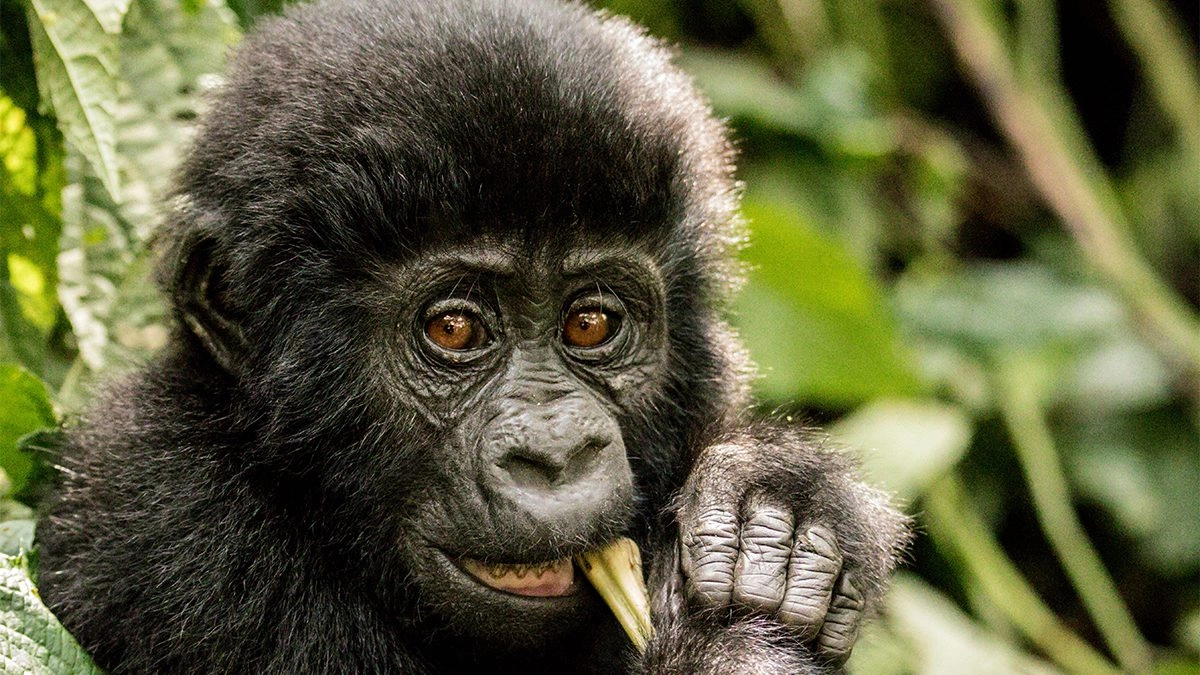
The emerald forest-covered hillsides of Bwindi Impenetrable National Park are home to over half the world’s population of wild mountain gorillas. You will depart in the early hours with a seasoned ranger to trek the rugged terrain in search of one of 19 habituated family groups and, once found, spend a precious hour watching them. While the hike can be demanding, the sight of a fully grown silverback emerging from the vines or the clumsy baby gorillas playing close to their mothers is one you won’t forget. Mountain gorillas are well-hidden from the world and you will have the chance to see them just as they are when no one is watching. Also, there is the option of a gorilla habituation experience, where you will spend four hours with a semi-habituated gorilla troop.
Trekking gorillas in Bwindi Impenetrable National Park can be done year-round, but the ideal conditions are probably from June to September and December to February when the park is drier and humidity is lower. Trekking in the middle months of the year does, however, attract a lower permit price. It is all up to you.
Explore Flora and Fauna on a Bwindi Forest Walk
While mountain gorillas may be the stars of the show in Bwindi Forest, it is one of the most ecologically rich rainforests in the world, and there is plenty more to see. Led by a seasoned guide on a walk beneath the lush canopy, where over 350 species of bird dwell, including 14 that aren’t found anywhere else in Uganda. There are a variety of well-developed trails, ranging from the short but sweet to seven-hour trails traversing the highest point in Bwindi. Along the trek, you may see cascading waterfalls, views of the Great Rift Valley and soaring mountain peaks, and plenty of wildlife. Keep an eye out for everything from Pel’s fishing owl to the cinnamon-chested bee-eater, forest elephant and incredible, exotic orchid. While the forest trails are open throughout the year, the dry season (June to September, December to February) will be the most enjoyable time to walk them.
Explore Lake Mutanda by mountain bike.
In the southernmost corner of Uganda lies Lake Mutanda, sitting 1800 m above sea level and having long been known as one of the most picturesque lakes in Africa. With its scenic surrounds that vary from secluded villages to the Virunga Massifs, Lake Mutanda is a perfect destination for mountain biking.
On a full day out, begin on the lake shores, where you may spot African otters and incredible birdlife before cycling through tiny villages and matooke (banana) fields, meeting the local people and seeing Uganda at its most laid-back. Also, there is a chance to take a more adventurous route into the lush and rugged foothills.
Learn about the traditions of the Batwa Tribe, “The Keepers of the Forest.”
Known as the “Keepers of the Forest,” the pygmy Batwa people are the original people of Bwindi Forest. You will hike into the forest with an expertly trained guide to visit the Batwa settlement and meet the local people, a real honor that not many can say they have had the chance to do.
You will join the women as they cook meals made with ingredients from the forest, meet medicine men and hear how they use the flora and fauna to heal several illnesses, and learn all about their hunter-gatherer lifestyle that has continued over thousands of years. The Batwa Tribe will share their ancient legends and traditional songs before waving you off.
Learn to cook traditional Baking dishes in Bwindi
At Ride 4 a Woman, you can learn how to cook traditional dishes of the Bakiga tribe. Wander through their gardens, pick and dig your choice of vegetables and herbs, and then set to work with the chef in the kitchen.
Learn how to weave traditional baskets in Bwindi
Together with the members of the Buhoma community, you can weave baskets from grass collected from the hills of Bwindi Impenetrable Forest. Seated on mats in the gardens of Ride 4 a Woman, the women will get you started showing you the skills needed to weave. Once you are confident, you are then free to create your very own African souvenir, which you can then take home. This relaxing activity gives you time to sit and interact with local Ugandan women within their own community nestled among the misty hills of Bwindi, home to Uganda’s mountain gorillas.
Learn how to do “The Kiga Dance” in Bwindi
The signature Kiga dance, local to Buhoma, is one of the key dances of the region’s Bakiga tribe. You will be welcomed to join and learn—you even get to wear the traditional dress. The Kiga dance is a celebratory dance demonstrating happiness.
The dancing of the Bakiga tribe is known for its show of strength with stamping aplenty. It is a huge amount of fun and great exercise all in the stunning setting of the Bwindi Impenetrable Forest – home to Uganda’s mountain gorillas.
Learn how to pedal sew with the women of Buhoma
The sales of the beautiful products created by the women from stunning African fabrics are one of the key income streams supporting the Ride 4 a Woman initiative. In the grounds of Ride 4 a Woman, nestled in the hills of the Bwindi Impenetrable Forest, you can learn how to pedal sew with the women of Buhoma, producing your choice of product, ready to take home. You make a coin purse, a pillowcase dress, a bandana, a sunglasses case or maybe some napkins for the dinner table back home.